Take a moment to think about how much time we spend indoors. Whether at home, at work, in schools, or in commercial buildings, most people spend most of their day in enclosed spaces. What many don’t realize is that the air inside these spaces is often more polluted than the air outside. In fact, indoor air can be two to five times more contaminated due to everyday activities, building materials, and biological contaminants circulating through ventilation systems.
This reality has made air purification not just a luxury, but a critical component of modern healthy environments.
tHE INVISIBLE CHALLENGE OF INDOOR AIR
Unlike visible dirt or clutter, air pollution is often invisible. Yet it can include dust, pollen, bacteria, mold spores, chemical compounds, and microscopic particles that affect both comfort and health. Many of these pollutants originate from normal daily activities such as cooking, cleaning, using electronics, or simply occupying a shared space.
Ventilation systems can unintentionally spread these contaminants throughout entire buildings. HVAC environments are often dark and humid, conditions that allow microorganisms like mold and bacteria to grow and then circulate through the air supply.
When these pollutants accumulate, occupants may experience headaches, fatigue, allergy symptoms, or respiratory discomfort. Over time, prolonged exposure to poor indoor air quality can contribute to more serious health concerns.
HEALTH STARTS WITH THE AIR WE BREATHE
Clean air is fundamental to overall well-being. Air purification technologies play an important role in reducing airborne particles and biological contaminants that can trigger health issues.
For example, high-efficiency filtration systems such as HEPA filters are capable of capturing up to 99.97% of airborne particles including dust, pollen, and pet dander.
Reducing these irritants can help minimize allergy and asthma symptoms while improving daily comfort.
Cleaner air also means fewer fine particles entering the lungs. These microscopic pollutants, often referred to as PM2.5, are associated with heart and respiratory disease when exposure is prolonged.
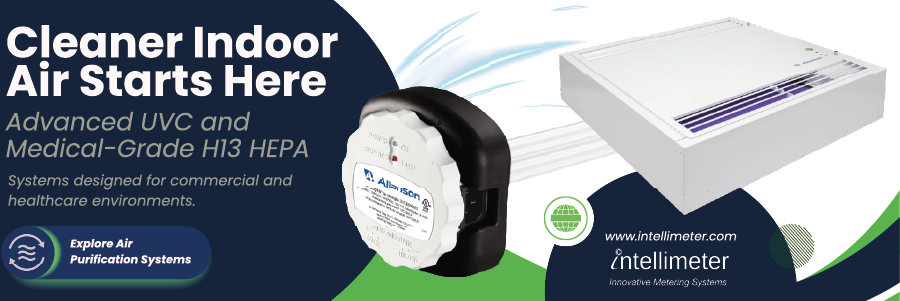
Air purification is not only about removing particles, it is also about controlling biological threats. Technologies such as ultraviolet (UV-C) air treatment can neutralize bacteria, viruses, and mold spores by disrupting their DNA, preventing them from reproducing and spreading.
The result is a healthier indoor environment that supports respiratory health, reduces illness transmission, and protects vulnerable populations such as children, seniors, and individuals with weakened immune systems.
BEYOND HEALTH: COMFORT, PRODUCTIVITY, AND PEACE OF MIND
The benefits of air purification extend beyond medical considerations. Clean air directly impacts how people feel, think, and perform throughout the day.
Removing odors and volatile organic compounds (VOCs) from the air helps create fresher, more pleasant spaces, particularly in environments such as offices, gyms, kitchens, and multi-occupancy buildings.
Improved indoor air quality has also been associated with better sleep and reduced nighttime irritation, allowing people to rest more comfortably.
In workplaces and educational settings, cleaner air can support concentration and reduce absenteeism by lowering the spread of airborne germs.
Ultimately, people may not always notice purified air, but they almost always notice when the air quality is poor.
HOW MODERN AIR PURIFICATION TECHNOLOGIES WORK TOGETHER
Today’s most effective air purification strategies use a layered approach rather than relying on a single technology.
Traditional filtration systems are designed to capture particles such as dust, pollen, and debris as air passes through them. However, filters alone do not neutralize microorganisms.
This is where complementary technologies such as UV-C treatment come into play. As air circulates through a purification chamber, UV-C light damages the genetic structure of airborne pathogens, rendering them inactive.
When filtration and UV-C are combined, the system can both trap particles and neutralize biological contaminants, creating a more comprehensive indoor air quality solution.
These systems are often integrated into HVAC infrastructure, allowing continuous treatment of all circulating air rather than targeting only a single room.
ENERGY, EFFICIENCY, AND BUILDING PERFORMANCE
Air purification also contributes to building performance and operational efficiency.
Microbial buildup inside HVAC components, such as coils and drain pans, can restrict airflow and reduce system efficiency. By preventing the growth of mold and bacteria, air treatment technologies help maintain cleaner components and improve airflow.
Cleaner systems often translate into reduced maintenance needs, lower energy consumption, and longer equipment lifespan.
This makes air purification not only a health decision but also a smart operational investment for facility managers and building owners.
A GROWING PRIORITY ACROSS INDUSTRIES
The demand for cleaner indoor air has increased significantly in recent years. Hospitals, schools, offices, hotels, and public facilities increasingly adopt air purification systems to reduce infection risks and improve occupant well-being.
Even residential spaces are seeing greater adoption as people become more aware of how indoor environments influence long-term health.
In many ways, air quality is becoming as important as lighting, temperature, and acoustics when designing modern spaces.
BUILDING A HEALTHIER INDOOR FUTURE
No single solution can eliminate every pollutant. Experts emphasize that air purification is most effective when integrated into a broader indoor air quality strategy that includes proper ventilation, regular maintenance, and control of pollution sources.
However, integrating modern purification technologies can significantly reduce airborne contaminants, improve comfort, and create safer shared environments.
As buildings become more energy-efficient and tightly sealed, the need for intentional air quality management will only continue to grow. Clean air is no longer just a background condition; it is a measurable, manageable factor that directly influences health, productivity, and quality of life.
CONCLUSION
Air is the one resource shared by all occupants. Unlike other building systems that serve specific functions, indoor air quality affects everyone, every minute of the day.
Investing in air purification ultimately supports healthier living, improved performance, and greater peace of mind. As awareness increases and technology continues to evolve, cleaner indoor air is quickly becoming a standard expectation rather than a luxury.
Because when the air improves, everything else, from comfort to health to productivity, improves with it.